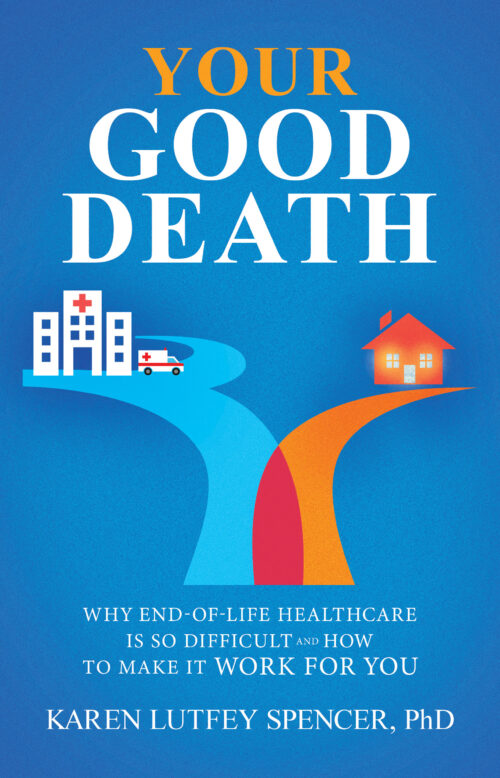

Your Good Death: Why End-of-Life Healthcare Is So Difficult and How to Make it Work for You
By Karen Lutfey Spencer PhD
Speaking to readers who are struggling to navigate end-of-life healthcare, Your Good Death presents both personal stories and research-based strategies capable of shaping key questions that could revolutionize the course of their care—even while healthy.
While most Americans say they prefer to die at home, only about a third will experience that outcome. One in four people find themselves caregiving, and the pressures are only increasing as our population ages and healthcare costs rise. Based on a decade of research, Karen Lutfey Spencer shows how our medical and cultural systems have hidden defaults that can conspire to prevent patients and families from having the kind of care they prefer. Readers will learn about different types of end-of-life care, especially palliative care and hospice, which are too often subject to damaging myths. They will learn how their own knowledge can operate alongside of—not subjugated to—medical expertise. They will gain information about caregiving that can help them lay groundwork in advance of an emergency. Dr. Spencer identifies inflection points where readers can pause and ask themselves key questions, which she helps them articulate. When readers understand the challenges that come with navigating end-of-life healthcare, they and their families will be better able to manage the process.