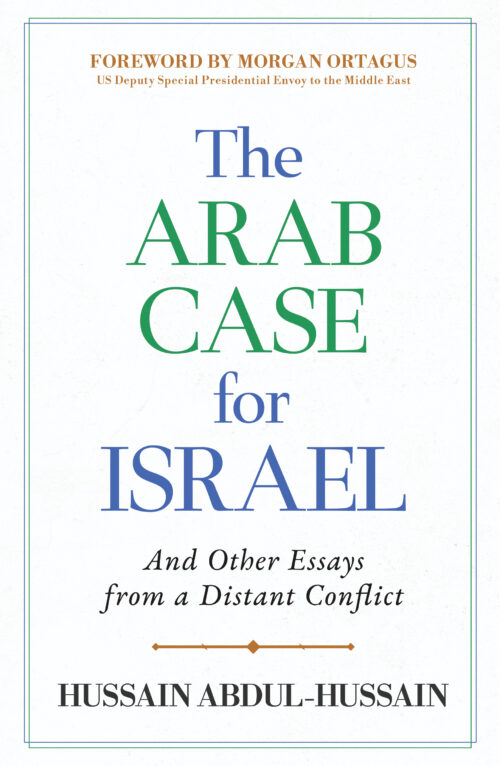

The Arab Case for Israel: And Other Essays from a Distant Conflict
By Hussain Abdul-Hussain
Why immediate and unconditional peace with Israel is a pressing interest for all Arab nations.
Before the State of Israel emerged, Arab nationalism and Islamism rejected the European-crafted state boundaries in the Middle East, including the concept of Palestine. Instead, these nations aspired to forge a unified Arab or Muslim nation. This grand vision, however, never materialized. The notion of Palestine as a distinct entity emerged in 1964, largely driven by inter-Arab rivalries rather than a historical reality. Since then, Palestinians have cultivated a narrative of a lost state that, in truth, never existed as a sovereign entity. Their collective aspiration for a “return” is less about reclaiming a physical homeland and more about yearning for a time when Israel did not exist. This imagined past fuels a vision that, if realized, risks creating yet another unstable state, given the challenges faced by many Arab nations today, including neighboring Syria and further away Iraq, where peace is always tenuous and civil war haunting these countries and their failing states.
A more pragmatic path forward lies in recognizing Israel’s existence as an opportunity rather than a threat. Israel’s robust economy, technological innovation, and regional influence make it a valuable partner. Arab states that have embraced peace with Israel, such as those in the Abraham Accords, have unlocked significant economic benefits proportional to their level of normalization. These agreements demonstrate that cooperation can yield mutual prosperity, fostering stability and growth across the region.
Arab intellectuals and leaders who privately support peace with Israel must boldly advocate for it publicly. It is time for Arab nations to pursue full normalization with Israel, embracing a future of coexistence and shared progress. By prioritizing peace over historical grievances, the region can move forward with stability, economic growth, and mutual respect.