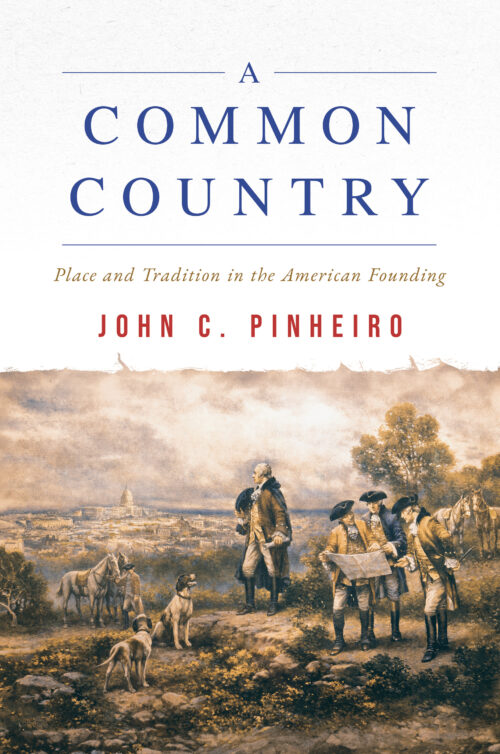
A Common Country: Place and Tradition in the American Founding
By John C. Pinheiro
In A Common Country, John C. Pinheiro takes a fresh look at America’s founding, moving beyond politically convenient arguments about heroes and villains to explore the real people, places, traditions, and beliefs that gave rise to the American experiment.
“Citizens by birth or choice, of a common country, that country has a right to concentrate your affections.” —George Washington, Farewell Address, 1796
Americans are increasingly divided over what their country is and what it ought to be. After 250 years, what does it mean to belong to a common country? What does it mean to be an American in an age when too many feel detached from or ashamed of their own past?
Only the American founding can answer this question. Rebuilding a consensus that looks at the founding with open-eyes as well as with admiration and a rightly ordered patriotism requires a fresh look at how place, experience, and a shared Western cultural heritage shaped the men who made it happen.
In A Common Country, historian John C. Pinheiro invites us to move beyond seeing the founding fathers only through their greatest achievements or moral failures. Instead of trying to use Washington, Jefferson, and Hamilton to advance a contemporary political agenda, Pinheiro investigates what inspired them to defend their liberties in revolution and found a constitutional republic. What he finds is that these Americans drew from homegrown traditions that were deeply embedded in the Western intellectual and religious heritage. The American founders were not ideologues but flesh-and-blood men who fought to preserve their ancestral freedoms. John Dickinson said it best: “Experience must be our only guide. Reason may mislead us.”
To know the founders as men of place and tradition is to appreciate not only what they accomplished, but also to understand their struggle to form a common country.